Every fashion merchandiser knows the shape of the season: traffic climbs from late October, peaks through Black Friday into mid-December, then flips polarity as the returns come home in January. Most Christmas advice covers the middle — campaigns, bundles, countdown timers. This guide is about the two ends, because that's where the experience is actually won: before the rush, and after the unwrapping.
1. Be ready before you think you need to be
Industry surveys keep finding the same thing: a large share of shoppers start buying gifts before the end of October. In Australia the season stacks on top of summer drops and Black Friday, so "Christmas readiness" realistically means late October: gift guides live, shipping cutoffs published, size advice working, and any new experience — try-on, personalisation, a stylist — launched early enough that it's proven before peak, not debugging during it.
2. Solve the gift-size problem
Fashion's structural Christmas weakness: much of December's revenue is bought by someone who has never worn the size they're guessing. Ordinary shoppers already hedge — about 2 in 3 buy multiple sizes planning to return some (NRF / Happy Returns, 2025) — and gift buyers guess blind on top of that. Everything you can do to replace guessing with knowing pays twice: once at conversion, once in January.
- Size advice from real measurements, not just a chart. Centimetre-level "this will be relaxed through the chest" beats "M fits most".
- Wishlists and saved looks that carry fit. When the recipient has a profile — a digital twin at their real measurements — a shared wishlist means the gift buyer is choosing from things that already fit. "I've seen it on them" beats "I hope it fits".
- Honest charts and exchange-first returns for everyone else, plus gift receipts that make exchanging painless.
3. Make gifting personal, not generic
"Gifts for her under $100" is a spreadsheet, not a service. The experience gap — remember, 76% of consumers say online shopping lacks excitement (Criteo, 2025) — is widest exactly when shoppers are buying for love under time pressure. What closes it: a stylist that understands intent ("something elegant for my mum, she likes linen, under $150"), outfit suggestions that complete a look around the gift, and personalised gift guides drawn from what the recipient has actually browsed or saved. McKinsey's line applies to December more than any month: faster-growing companies earn 40% more of their revenue from personalisation.
4. Show it on them, not on the model
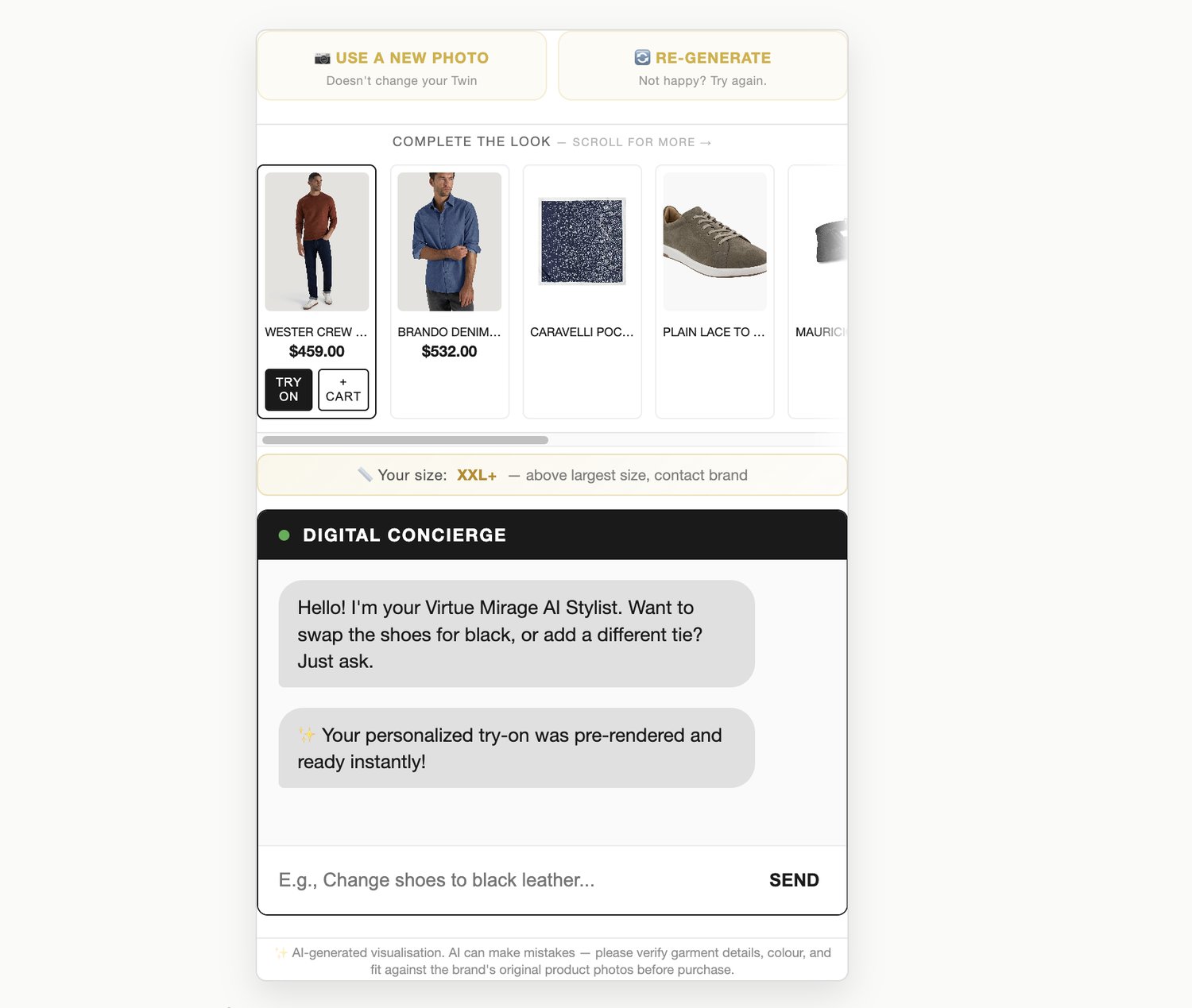
Our stake declared: this is what Virtue Mirage does, so weigh accordingly. The most direct answer to "will it suit me?" — the question that stalls December baskets — is to render the clothes on the shopper's own digital twin at their real measurements, across the whole store rather than one modal. For Christmas it works both directions: self-shoppers see themselves in the party dress before committing, and gift buyers browsing a shared wishlist see the recipient in it. The mechanics are in our hyper-personalisation guide; the wider tool landscape, competitors included, is in the honest 2026 roundup.
5. Stay fast, stay honest, under load
Peak season punishes both slowness and spin. Two rules: anything personalised should be pre-generated — computed in the background when stock lands, so nothing waits on a click at 9pm on December 18th — and every promise should survive contact with the courier. Publish real cutoff dates, show stock honestly, and when something slips, say so before the customer asks. Certainty is a Christmas feature; a kept "order by the 19th" builds more loyalty than a risky "order by the 22nd".
6. Plan January as part of Christmas
With Australians spending A$11.6bn a year on fashion online (Australia Post, 2025) and apparel return rates of 20–30%, January is not an aftermath — it's a second season. Handled adversarially, it erases December's goodwill; handled well, it converts gift recipients into customers who chose nothing yet ended up with something that fits. Extended return windows through January, exchange-first flows that suggest the right size rather than refunding by default, and a "set up your fit profile" moment in the exchange journey all turn the returns desk into an acquisition channel.
The pre-November checklist
- Gift guides, cutoff dates and returns policy live by late October.
- Real-measurement size advice on every product page.
- Wishlists / saved looks shareable, carrying the recipient's fit.
- Personal styling that understands intent, not just filters.
- Personalised imagery pre-generated — no spinners at peak.
- Extended January returns with an exchange-first flow.
- One experience upgrade launched and proven before Black Friday.
Virtue Mirage adds digital twins, centimetre-level fit advice, shareable saved looks and whole-store personalised imagery to Shopify and BigCommerce stores — book a 20-minute demo or install it from the Shopify App Store in time for the season. The 4½-minute film shows it end to end.
FAQ
When should a fashion store start preparing for Christmas?
October at the latest — a large share of shoppers begin buying gifts before the end of October, and anything that needs setup (size advice, gift guides, personalisation, shipping cutoffs) should be live before they arrive. In Australia the season also stacks on top of summer and Black Friday, so the window is earlier than the calendar suggests.
How do I reduce returns from Christmas gift purchases?
Attack sizing before the purchase, not after. Gift buyers guess sizes worse than anyone, and about 2 in 3 online fashion shoppers already buy multiple sizes planning to return some. Real-measurement size advice, shareable saved looks and wishlists that carry the recipient's own fit, clear size charts, and exchange-first return options all move returns down; January-friendly extended return windows make the remaining ones cheaper in goodwill.
How does personalisation help Christmas shoppers?
Two ways. For self-shoppers, showing clothes on their own digital twin at their real measurements answers 'will it suit me?' before the gift budget gets spent elsewhere — useful when 76% of consumers say online shopping lacks excitement. For gift buyers, saved looks and wishlists rendered on the recipient turn 'I hope it fits' into 'I've seen it on them', and a stylist that understands intent ('something for mum, elegant, under $150') beats scrolling category pages.
What makes a good online Christmas shopping experience?
Certainty, speed and warmth: clear delivery cutoffs kept honest, pages that stay fast under peak load, sizing the shopper can trust, easy gift options, and returns that feel generous rather than adversarial. The experience extends into January — how the exchange goes decides whether a December gift becomes a February customer.