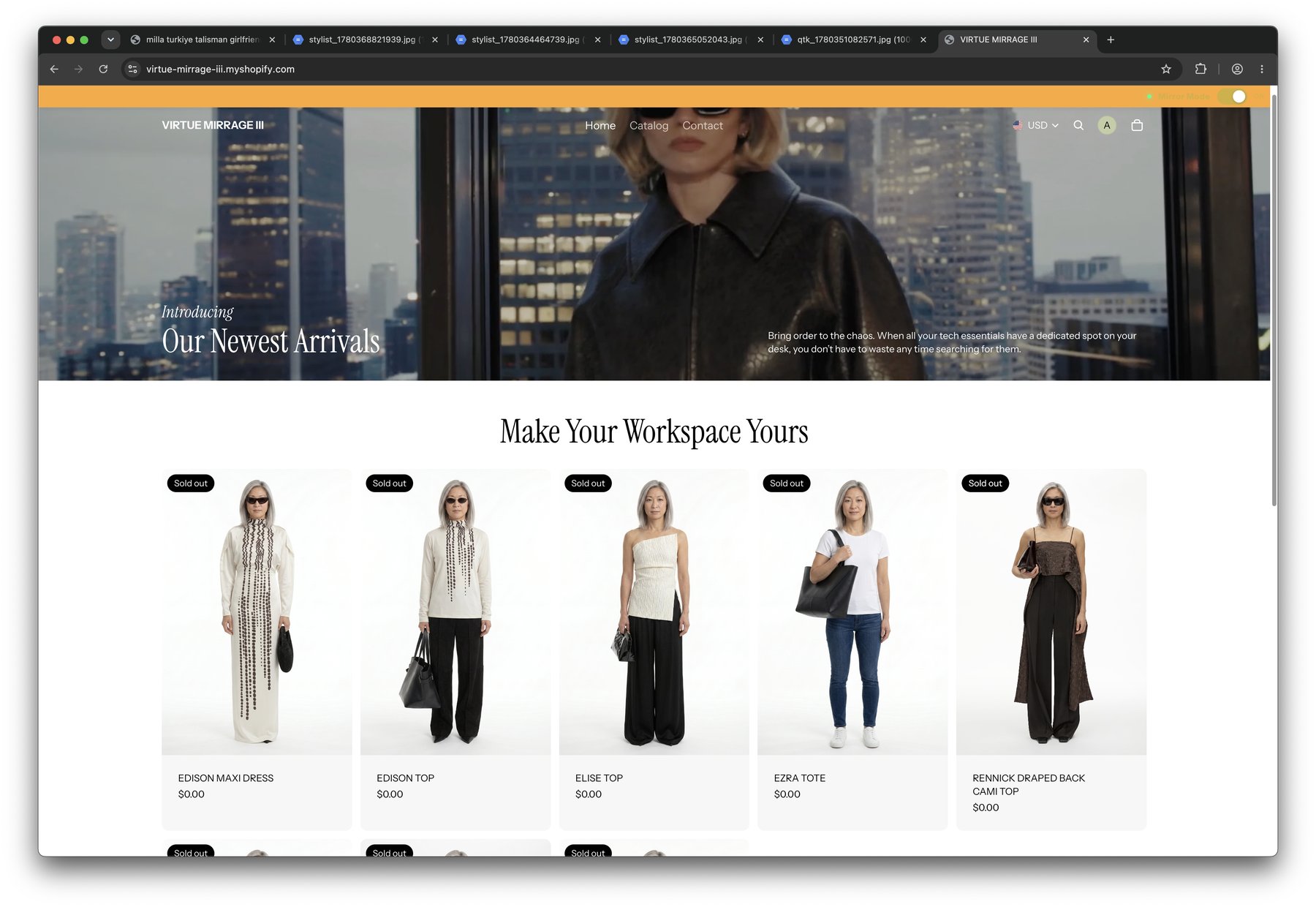
What is "me-commerce"?
Me-commerce is the next step past personalisation. Classic personalisation changes the recommendations — "you might also like." Me-commerce changes the picture — the shopper sees themselves wearing every product, everywhere on the site. It turns a catalogue of stock models into a storefront that is unique to each person who logs in.
That matters because the product image is the single most influential element on a fashion page. Personalising copy or recommendations helps; personalising the hero image of every product is a different order of impact.
Why personalisation pays
The data on personalisation is unusually consistent: it lifts revenue by roughly 5–25%, recommendations drive about 31% of e-commerce revenue, and 92% of brands now use AI to do it. The catch is that most brands are personalising the same two or three things everyone else is. The imagery — the part shoppers actually look at — has stayed generic. Virtue Mirage moves personalisation to where attention already is.
How the whole store transforms
A shopper creates their Digital Twin once (two photos, ~90 seconds). From then on:
- Every product page renders on them. Not one hero item — the whole catalogue.
- A Mirror Mode toggle lets them flip between your campaign photography and themselves, anytime. Your brand vision stays intact; the personal layer sits on top.
- New arrivals convert automatically. When you publish a new collection, the system pre-renders every eligible customer wearing every new piece in the background — and emails them when it's ready. They open the store and the drop is already on their body.
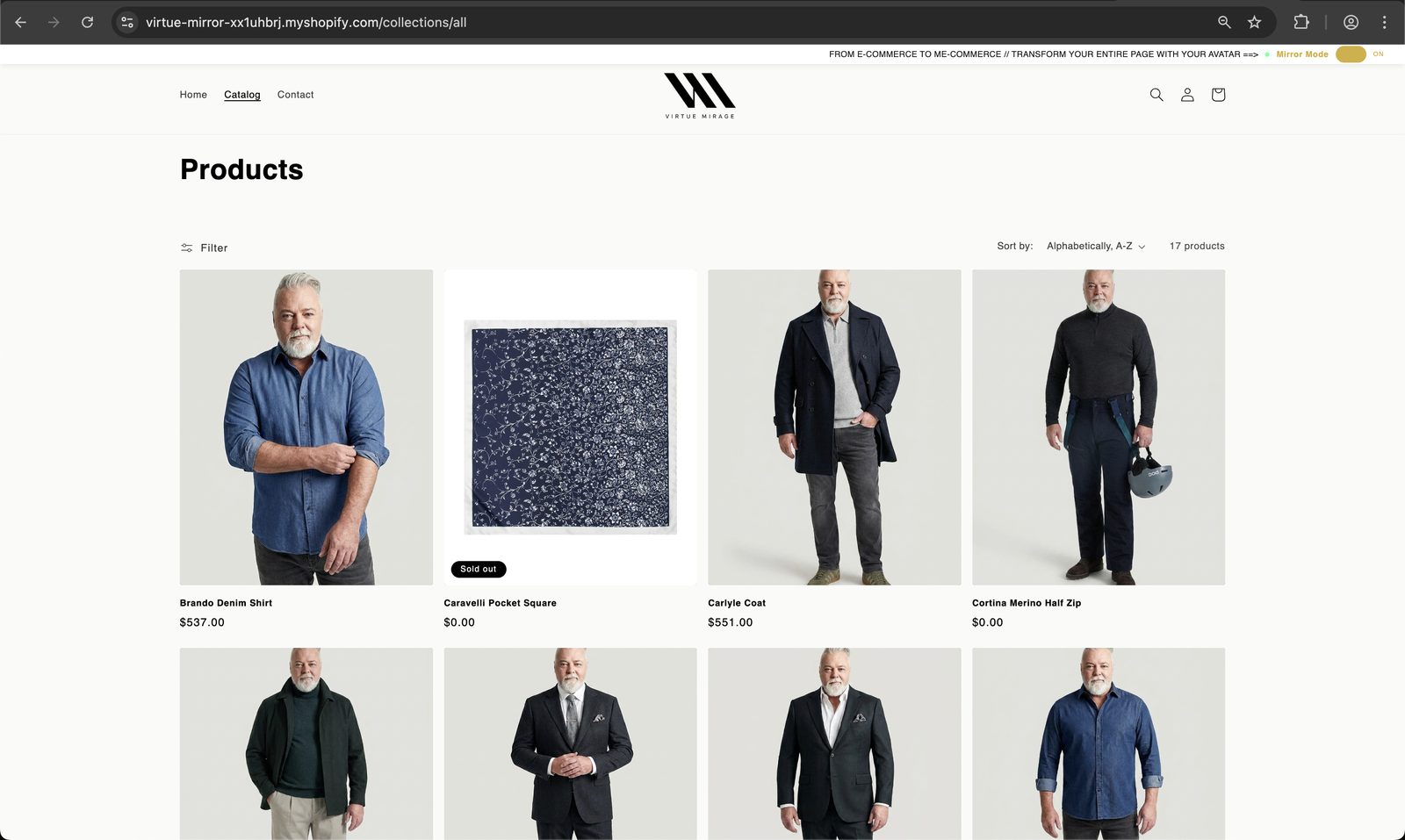
That last point is the quiet superpower. Personalisation usually happens when the shopper acts. Here it happens the moment you publish — so the experience is ready and waiting, not generated on a laggy click.
Does it replace my brand photography?
No — it builds on it. Your campaign imagery still sets the brand; Mirror Mode adds a personal view the shopper controls. Built by a fashion studio with 15 years behind the lens, the personalised renders are held to the same standard as the photography they sit beside.
Virtue Mirage is built by Virtue Creative Studios — 15 years shooting for 500+ fashion brands. We can produce the product, model, campaign and video imagery your store needs, made to work seamlessly with your AI try-on. See what the studio can do →
FAQ
What's the difference between personalisation and me-commerce?
Personalisation changes what you're recommended; me-commerce changes the imagery itself, so the shopper sees the whole store on their own body.
Does the whole catalogue really render per customer?
Yes. After a shopper creates their Digital Twin, every product page renders on them, and new arrivals are pre-rendered automatically.
Do new products get personalised automatically?
Yes — when you publish a new collection, it's pre-rendered onto eligible customers in the background before they next log in.
Will it slow my store down?
No — renders are prepared in the background ahead of time, not generated live when a shopper clicks.