Why does fit cause so many returns?
Because online, nobody can try anything on. The average online apparel return rate sits around 24–26%, climbing past 30% in categories like swimwear and formalwear. Compare that to roughly 3% in-store — the gap is almost entirely the fitting room. And when shoppers are asked why they returned, fit and size dominate: up to ~70% of apparel returns come down to it.
The hidden driver is the model. A shopper looking at a dress on a size-6 model has no way to translate that to their own size-14 body. So they guess, they bracket-buy two sizes, and they send one (or both) back. Every return is shipping, processing, and lost margin.
How Virtue Mirage reads size from a photo
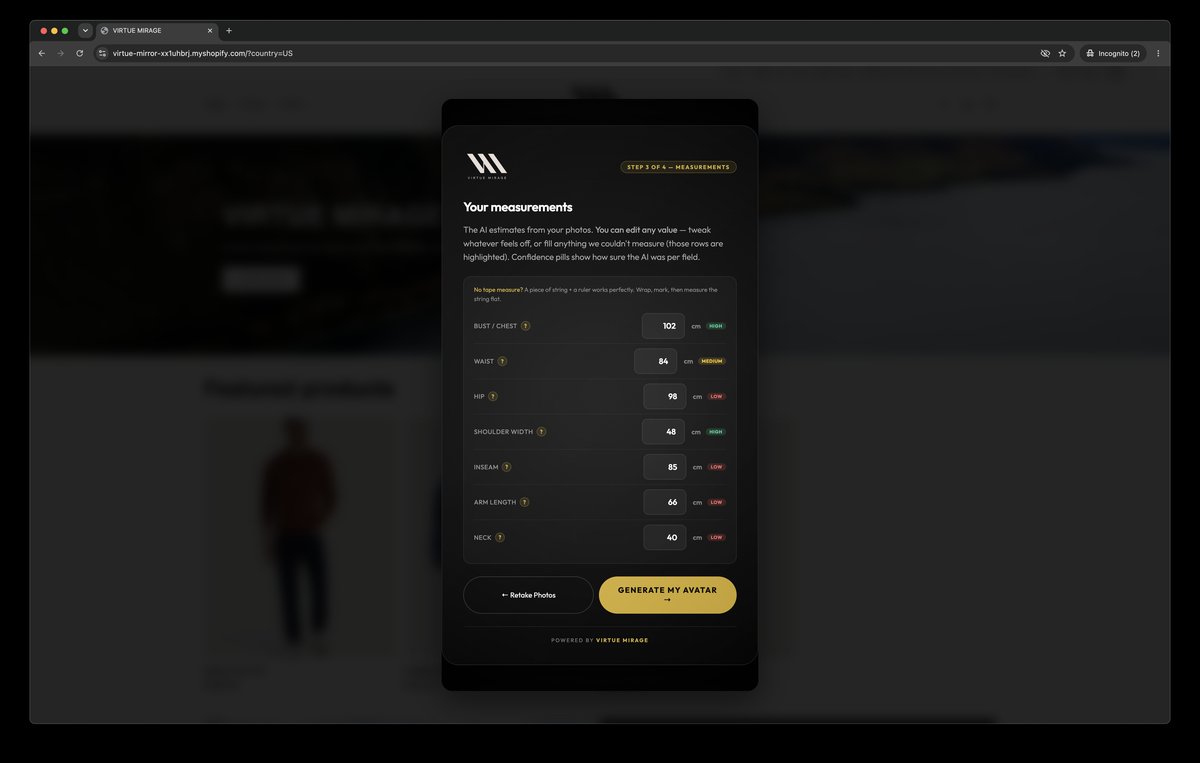
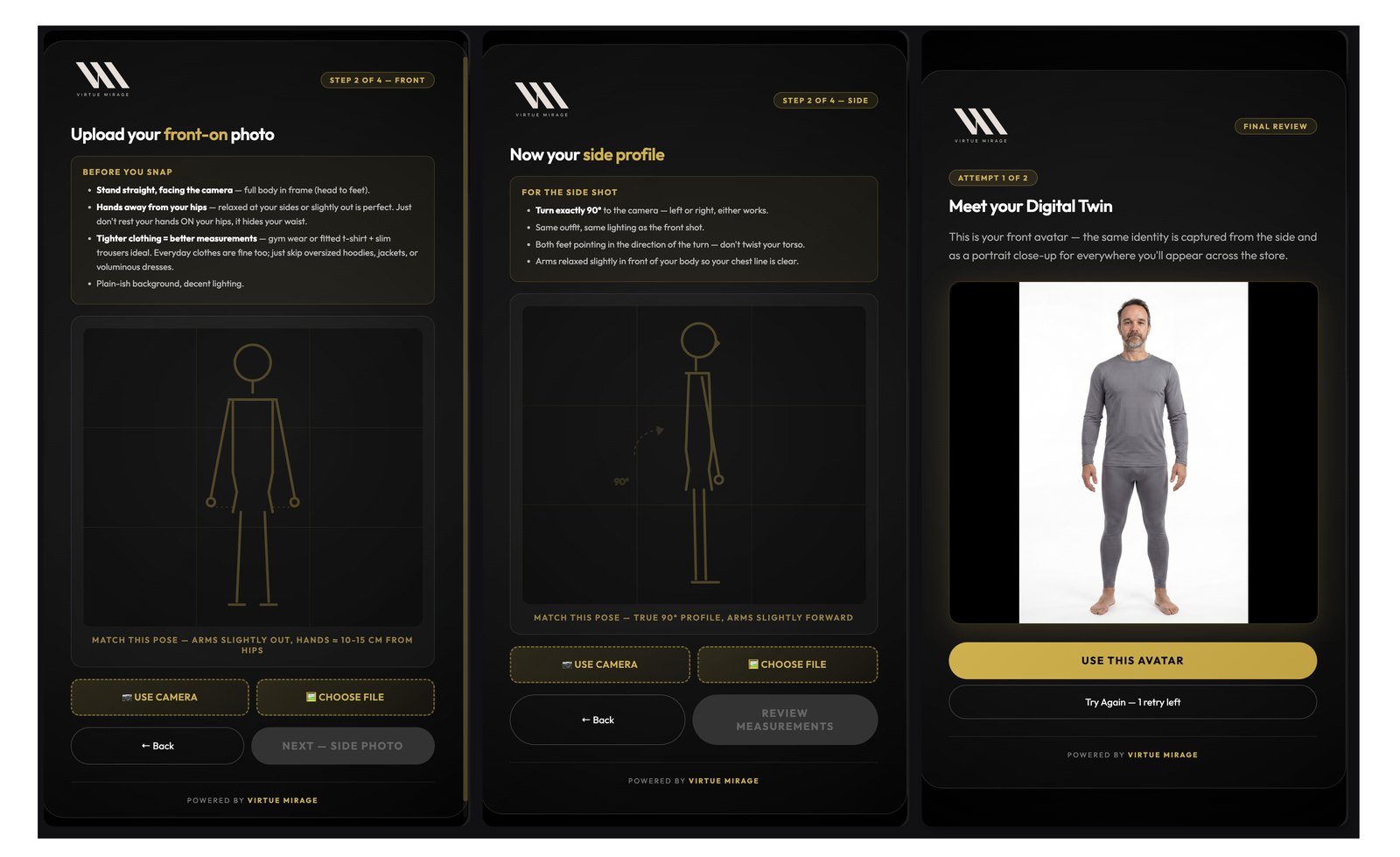
When a customer creates their Digital Twin, they upload two photos — a portrait and a full-body shot. From those, the platform calculates their measurements (with a confidence score) and maps them to your brand's sizing matrix. Two things come out of that:
- The garment renders at their real size. The avatar isn't a generic model — it's the customer's actual proportions. They see how the fabric falls on a body like theirs.
- A size recommendation appears on every product page. No size-chart squinting, no guesswork — a clear "we'd suggest a 14" badge, brand-specific.
What it does to returns and confidence
Virtual try-on that reflects real fit has a measurable track record: retailer case studies report return reductions of 20–40% after implementation (Zalando reported a 40% drop in a 2023 test). The mechanism is simple — when shoppers can see the item on a body like their own and get a size steer, they order the right size the first time.
It's also a confidence and inclusivity story. Showing the garment on the shopper's real size says, plainly, "this is for you" — which is exactly what converts hesitant browsers into buyers.
Does it replace a size chart?
It complements it. The size chart stays; Virtue Mirage adds the thing a chart can never do — show the customer the fit on their own body and translate measurements into a confident recommendation. For the brand, it means fewer fit-driven returns without touching your product data beyond the sizing matrix you already have.
Virtue Mirage is built by Virtue Creative Studios — 15 years shooting for 500+ fashion brands — and Virtue Mirage subscribers get 20% off on-model e-commerce photography. On-model shots are also the AI's best garment reference, so your shoots and your renders improve together. See what the studio can do →
FAQ
How does Virtue Mirage know my size?
It calculates your measurements from the two photos you upload when you create your Digital Twin, with a confidence score, then matches them to the brand's sizing matrix.
Will the clothes look like they fit my real body?
Yes — that's the point. The avatar reflects your real proportions, so you see how a garment falls on a body like yours, not on a smaller model.
Does visual fit actually reduce returns?
Industry case studies report 20–40% fewer returns after virtual try-on with fit reflected; fit is responsible for up to ~70% of apparel returns, so it's the highest-leverage lever there is.
Do I still get a size recommendation?
Yes — a brand-specific size suggestion appears on every product page, on top of seeing the item on yourself.